
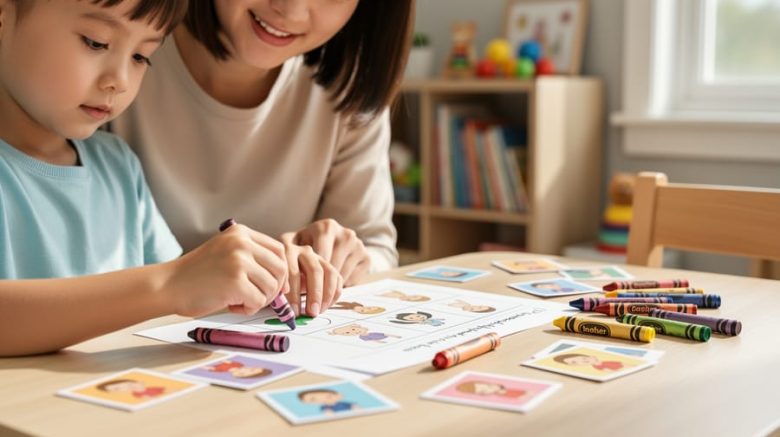
Preschool critical thinking worksheets work best when they’re short, hands-on, and tied to a simple question like “What’s different?” or “What happens next?” Plan on 10 to 15 minutes, a pencil or crayon, and a few printable pages. No teaching background needed. The main prerequisite is patience, because at ages 3 to 5 the talking you do around the page matters more than the answers on it.
Here’s why they help. Matching, sorting, pattern, and sequencing pages ask a child to notice details, compare, and explain a choice, which are the building blocks of reasoning. A four-year-old who says “this one doesn’t belong because it’s not red” is already practising logic. The worksheet just gives that moment a structure.
You don’t need a perfect setup or a quiet house. Any caregiver can run these sessions: a parent at the kitchen table, a dad during after-dinner downtime, a grandparent on a visit, or two households sharing the same routine so a child gets steady practice wherever they are. Fathers who build small learning rituals like this often find they become some of the most treasured parts of the week.
Below, you’ll find the types of worksheets worth choosing, what to gather, when to stop, a simple routine to follow, and how to tell it’s working.
What Critical Thinking Looks Like at Ages 3 to 5
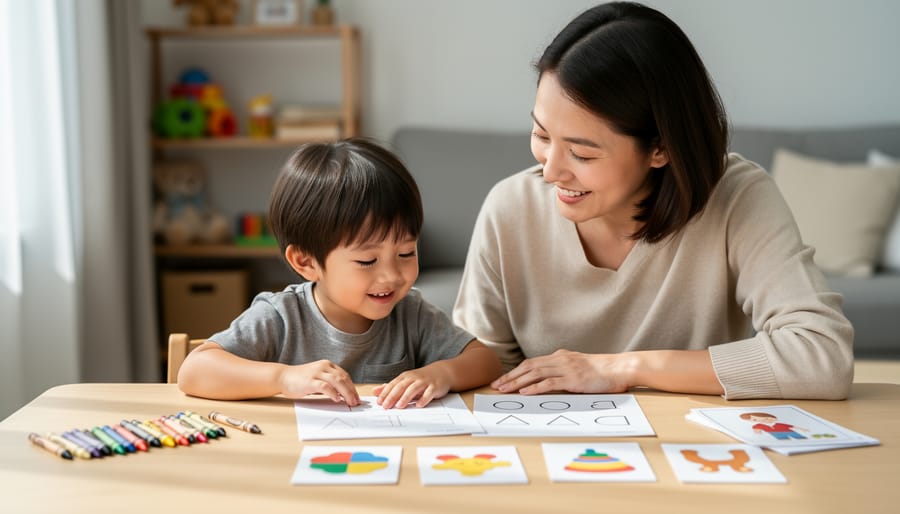
For a three-, four-, or five-year-old, critical thinking is simply the habit of noticing things and making sense of them. It doesn’t involve big words or tough puzzles. It shows up when your child lines up toy cars by color, says “that one is bigger,” or points out that the banana doesn’t belong with the toy trucks.
Here are the everyday skills to watch for:
– Sorting: grouping objects by color, shape, size, or use.
– Comparing: noticing what is the same and what is different.
– Spotting what doesn’t belong: finding the odd one out in a group.
– Predicting: guessing what comes next in a pattern or a story.
– Explaining: answering “why do you think that?” in their own words.
That last skill matters most. A child who says “because it has wheels and the others don’t” is doing real reasoning, even if the sentence comes out a little tangled.
Worksheets are just one tool for practicing these skills. Building blocks, snack-time sorting, puzzles, and chatting on a walk work just as well, and often better. The paper simply gives you a calm, focused way to practice one skill at a time.
Anyone who spends time with your child can help. Dads, moms, grandparents, and other caregivers all have an equal part to play, because the real work happens in small, daily moments of asking questions and listening to the answers. You don’t need special training. You just need curiosity and a little patience.
Worksheet Types Worth Trying and Why Each One Works
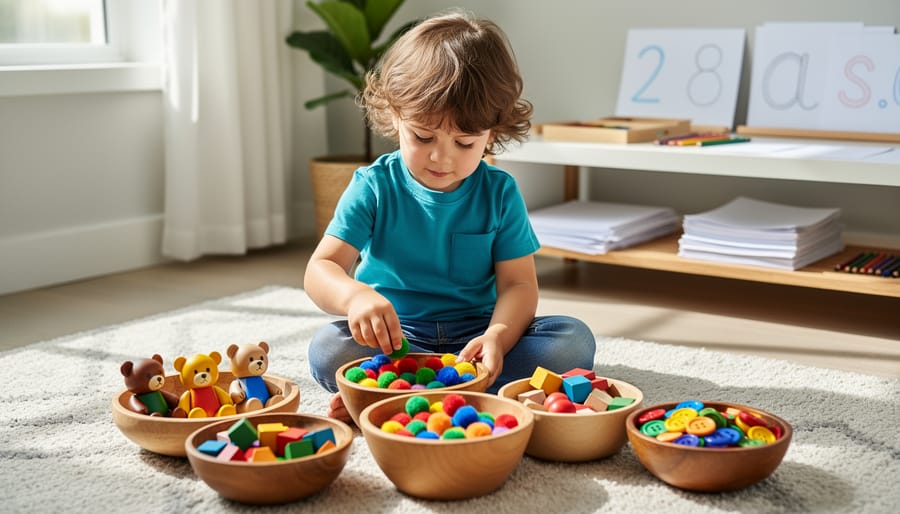
Not every worksheet builds the same skill, so it helps to know what each type is for. This list is a curated set of formats, chosen because they ask a child to think rather than just trace or copy.
- Odd-one-out: builds noticing and comparing; ask, “Which one doesn’t belong, and what makes it different?”
- Sorting and categorizing: builds grouping by a rule like color, size, or use; ask, “How did you decide which pile this goes in?”
- Pattern completion: builds prediction and spotting repeats; ask, “What comes next, and how do you know?”
- What-happens-next sequencing: builds cause and effect and ordering; ask, “What do you think happens after this picture?”
- Simple mazes and path-finding: builds planning ahead; ask, “Which way looks like it might get stuck?”
- Matching pairs: builds attention to detail and visual memory; ask, “What tells you these two go together?”
- Spot the difference: builds careful looking and describing; ask, “What changed between these two pictures?”
Skip the bold on those labels if your own notes feel cluttered, but keep the sample questions. They matter more than the page itself, because the talking is where the reasoning happens.
When you’re choosing a worksheet, a few simple checks save a lot of wasted printing:
– Clear visuals: pictures should be large, uncluttered, and easy for small eyes to tell apart.
– One task per page: a single, obvious job keeps a three- or four-year-old from feeling overwhelmed.
– Room for open-ended follow-up: the best pages invite a “why do you think that?” rather than a single right answer.
– No heavy reading: if you have to read paragraphs aloud to explain it, the page is probably meant for an older child.
A good worksheet is one a child can start on with a short instruction from you, then spend the rest of the time thinking and explaining. If a page needs a lot of coaching just to get going, set it aside for later. Any caregiver can use these formats, whether it’s mom, dad, grandparent, or a co-parent in a second home, because the skill comes from the shared conversation, not from who’s holding the pencil.
Tools and Materials to Have Ready Before You Start
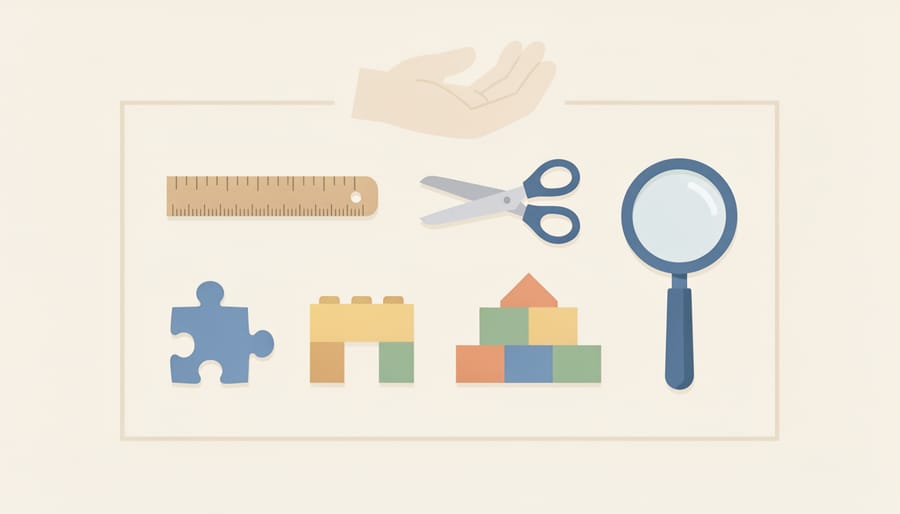
You don’t need much to get started, and none of it has to cost a lot. Here’s a simple checklist to gather before your first session:
- Printed worksheets: free printables from library or school websites work fine, or draw your own odd-one-out and pattern pages on plain paper.
- Chunky crayons or short, fat pencils that small hands can grip comfortably.
- Safety scissors with rounded tips, only if the worksheet involves cutting.
- Glue sticks, which are tidier than liquid glue for sorting and matching activities.
- Counters for sorting practice; large buttons, dried pasta shapes, or coins from your kitchen drawer work just as well as store-bought ones.
- A kitchen timer or phone timer to keep sessions to 10 or 15 minutes.
- A comfortable table and chair, with feet resting flat or on a stool, in a quiet spot away from the TV.
Once you’ve gathered everything, put it all in one shoebox or zip-top bag. This becomes your worksheet kit.
If your child moves between two homes, a duplicate kit can be a real gift. It doesn’t need to be fancy. A second set of crayons and a handful of buttons in each household means the routine looks and feels the same whether it’s Mom’s house, Dad’s house, or Grandma’s kitchen table. Consistency like that helps your child feel secure and ready to focus.
Safety Warnings and When to Stop a Worksheet Session
Worksheet time is low-risk, but a few habits keep it that way. Stay within arm’s reach whenever your child uses safety scissors or glue sticks, and choose non-toxic, washable crayons, markers, and glue. Little ones still put things in their mouths, so check labels for age ratings.
Keep screens to a minimum, too. Printed pages invite hands-on exploration, while tablet worksheets can tip into passive tapping, so save them for occasional use and sit alongside your child when you do.
Knowing when to stop matters just as much. Frustration, tears, yawning, wandering eyes, or a sudden interest in anything else all tell you it’s time to pause or switch to a simple game. Stopping early isn’t failure. A tired child learns very little, and rest plays a bigger part than most of us expect, which is why the link between [sleep and learning](https://www.cspas.ca/2026/06/the-natural-sleep-remedies-that-actually-help-your-family-rest-evidence-based/) is worth keeping in mind. A cheerful five-minute session beats a stressful fifteen-minute one, and your calm response teaches your child that trying is safe.
Step-by-Step: Running a Worksheet Session That Builds Thinking Skills
A good session is short, calm, and the same every time. Here’s a routine that fits into 10 to 15 minutes and works with the parental teaching strategies that help young children learn best.
- Pick one worksheet at the right level. Choose a page your child can mostly finish with a little effort. If they breeze through it, move up. If they melt down, move down.
- Set up a calm space. Clear the table, turn off the TV, and put out only what you need: the page, a crayon, and maybe a few counters.
- Introduce the task in plain words. Say something like, “Let’s find the one that doesn’t belong.” Skip long explanations.
- Let your child try first. Hold back hints for a full minute. Struggling a little is where the thinking happens.
- Ask open-ended questions. Try “How did you decide?” or “What makes you say that?” There’s no wrong answer to these.
- Think out loud yourself. Model it gently: “Hmm, these three are round, but this one has corners.”
- Celebrate effort over accuracy. Praise the trying: “You looked so carefully at every picture!”
- Connect it to real life. Ask your child to sort the laundry into socks and shirts, or to spot a pattern in fence posts on your next walk.
If your child gets the “wrong” answer, resist the urge to correct right away. Ask them to explain their thinking first. Often there’s a sensible reason behind it, and hearing it tells you far more than a checkmark would.
One last tip: keep the routine the same wherever your child is. If they do worksheets at the kitchen table with a crayon and one friendly question at Mom’s house, do the same at Dad’s. Children feel secure when the steps look familiar, and it reminds them that both parents are equally involved in how they learn. Even a simple shared note about which worksheet you tried and what they said can keep everyone on the same page.
How to Tell It’s Working and What to Try Next
You’ll know the worksheets are helping when you see changes in how your child talks and tries, not just in how many pages get finished. Watch for a child who explains a choice in their own words (“This one is different because it has wheels”), spots a pattern on a walk without being asked, asks “why” more often, or tries again after a mistake instead of giving up. Those habits line up with the critical thinking traits that matter most in the early years: curiosity, patience, and willingness to reason things through.
Tracking progress doesn’t need to be fancy. Keep finished pages in a small folder and jot a date and one quick note on the back, such as “explained the pattern without hints.” If your child splits time between two homes, a shared note on your phone lets both parents add observations, so everyone sees the same picture of growth.
When a task starts feeling easy, raise the challenge gradually. Add a second rule to sorting (by color, then by size), try longer patterns, or ask for two reasons instead of one. Change only one thing at a time so your child stays confident.
Mix in non-paper activities too. Building blocks, storytelling (“What do you think happens next?”), and sorting snacks or laundry all stretch the same skills.
Finally, remember that steady, caring involvement from both parents is one of the strongest supports for early learning. A relaxed ten minutes together, with dad or any caregiver fully present, beats a perfect worksheet every time.
Common Questions About Preschool Critical Thinking Worksheets
How many worksheets per week is enough?
Two to four short sessions of 10 to 15 minutes each is plenty for most 3 to 5 year olds. One worksheet per sitting is enough, and talking about it afterward matters more than finishing a stack.
What if my child refuses to sit still?
Let them stand at the table, work on the floor, or take a movement break between tasks. If the wiggles keep winning, pause and try again later, or turn the same idea into a game like sorting toys.
Are free printables as good as paid ones?
Yes, often. Look for clear pictures, one task per page, and room for open-ended questions, and you’ll find plenty of good free options.
How do we keep things consistent between two homes?
Share the same simple routine rather than the same stack of paper: one worksheet, the same “How did you decide?” question, and a short note or photo of what your child tried. That way, dad’s time and mom’s time feel like one steady rhythm for your child.
Can younger siblings join in? Absolutely. Give them a simpler version, like matching two identical pictures or sorting big blocks by color, so everyone feels included. Just keep small counters and scissors well away from toddlers who still mouth things.
If you’re juggling a busy household budget, it can help to keep an eye on child care updates that may affect your family. Whatever your setup, a few relaxed minutes of thinking together counts, and no household needs a perfect system to do this well.
Teaching Kids Critical Thinking doesn’t require a big program or a stack of expensive materials. It grows out of small moments: a child deciding which picture doesn’t belong, explaining why a pattern continues the way it does, or trying again after a wrong guess. A short worksheet, a few open-ended questions, and your full attention are enough to make those moments count.
So start small. Pick one worksheet this week, set it on the table, and ask your child, “How did you decide?” Then listen to the answer. That’s the whole routine, and it works whether you’re at the kitchen table, in a second home, or sitting beside a grandparent or another trusted caregiver.
Early learning belongs to everyone who loves the child. At Fathers Rights Canada, we believe children thrive when both parents can be actively involved, and shared, steady moments of curiosity are one of the simplest ways to make that real.