

Parental teaching is the deliberate, everyday practice of passing knowledge, skills, values, and competencies to your children through conversation, demonstration, and guided practice. It works because children learn most effectively through repeated exposure and active participation with a trusted adult who adapts lessons to their developmental stage. Every parent teaches, whether they realize it or not. The question is whether you’re doing it intentionally and effectively.
The difference between incidental parenting and purposeful teaching lies in preparation and follow-through. When you consciously decide what you want your child to learn, break it down into manageable steps, and create opportunities for them to practice with feedback, you transform ordinary moments into powerful learning experiences. This isn’t about becoming a formal instructor or following rigid curricula. It’s about recognizing that teaching your child to tie their shoes, manage emotions, cook a simple meal, or think critically about advertising all follow the same fundamental process.
Many parents feel unprepared for this role, especially when children ask difficult questions or need skills the parent hasn’t consciously thought about in years. Others worry about doing it wrong or damaging their child’s confidence. The reality is simpler than it seems. Children are remarkably resilient learners, and parents who approach teaching with patience, clarity, and consistency see results across every area of development.
For parents raising children across two households, maintaining consistent teaching approaches requires coordination, but the core methods remain unchanged. The strategies that follow work in any family structure because they’re built on universal principles of how children actually learn, not idealized circumstances that rarely exist in real life.
What You Need to Begin Teaching Your Child
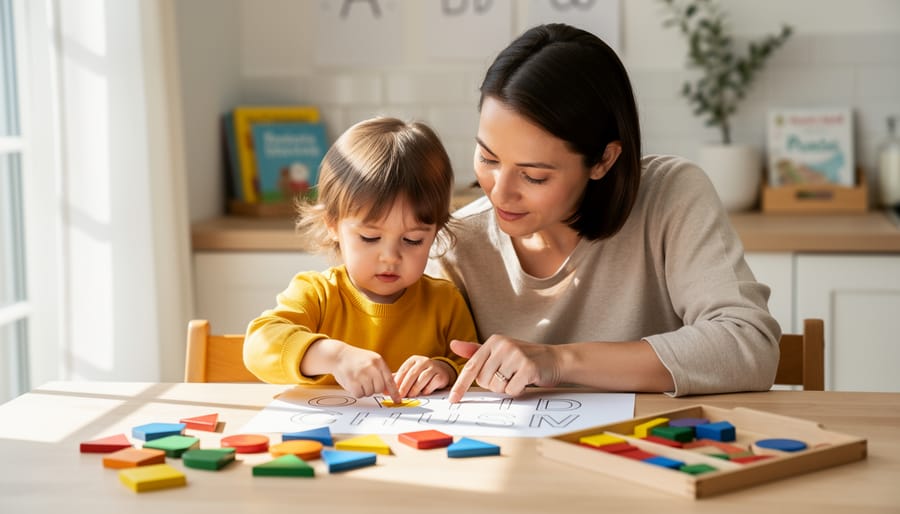
You don’t need elaborate tools or a teaching degree to start educating your child effectively. What you do need is a shift in perspective, from simply managing your child’s day to actively teaching through everyday moments. This mindset change transforms routine activities into learning opportunities, whether you’re making breakfast, running errands, or establishing sleep routines.
Before you begin, ensure you have these foundational elements in place:
- Emotional availability, the capacity to be present and responsive rather than distracted or stressed during teaching moments
- Realistic time expectations, understanding that teaching happens in small increments throughout the day, not in scheduled hour-long sessions
- Age-appropriate goals, knowledge of what your child can reasonably learn at their current developmental stage
- A learning-friendly environment, spaces where mistakes are safe and curiosity is welcomed
Identifying your child’s learning style makes your teaching far more effective. Some children grasp concepts by watching you demonstrate, others need hands-on practice, and many require verbal explanations paired with visual examples. Pay attention to how your child naturally approaches new situations. Do they jump in and try things immediately, or do they observe carefully first? This observation tells you how to structure your teaching approach.
Consistency matters more than perfection. You’ll have days when patience runs thin or schedules fall apart, and that’s normal. What counts is returning to intentional teaching when you can. Set one or two specific skills to work on rather than trying to teach everything at once. A child who masters basic meal preparation through repeated practice learns more than one exposed to dozens of skills superficially.
Your emotional readiness is just as important as any external resource. Teaching requires patience to let children work through challenges at their own pace, even when you could complete the task in seconds. It means celebrating small progress and viewing setbacks as natural parts of learning rather than failures.
Important Considerations Before You Start
Before you begin intentionally teaching your child, recognize the common missteps that sabotage even well-meaning efforts. The most damaging mistake is inconsistency, teaching one behaviour today and ignoring it tomorrow confuses children and undermines your credibility. When you establish a rule or expectation, follow through reliably. Children learn more from what you consistently do than what you occasionally say.
Age-inappropriate expectations rank among the fastest routes to mutual frustration. A four-year-old cannot maintain the impulse control of an eight-year-old, and expecting otherwise sets both of you up for failure. Before introducing any new skill or value, research typical developmental milestones for your child’s age. What feels like defiance is often simply developmental limitation.
Attempting too much at once overwhelms children and dilutes your teaching effectiveness. Focus on one or two skills at a time, allowing genuine progress before introducing the next challenge. This concentrated approach produces better results than scattering your efforts across multiple areas.
Pause your teaching efforts when your child is physically ill, emotionally distressed, or experiencing major life transitions. These circumstances demand support and stability, not new demands. Similarly, recognize when outside expertise would serve your child better. Persistent behavioural concerns, learning difficulties that don’t respond to your approaches, or emotional struggles beyond normal developmental phases warrant consultation with educators, counselors, or child development specialists.
Financial resources like child care benefits can help access professional support when needed, ensuring your child receives comprehensive guidance beyond what you can provide alone.
Step-by-Step Process for Teaching Life Skills
Identify and Prioritize What to Teach
Start with your child’s current capabilities and developmental stage rather than an idealized checklist. A five-year-old ready to dress independently needs that skill prioritized over abstract concepts like financial literacy. Observe where your child struggles in daily routines, morning preparation, mealtime behavior, conflict resolution with siblings, and choose one or two skills that will meaningfully improve their daily life.
Balance three categories: practical life skills (tying shoes, preparing simple meals, managing belongings), emotional intelligence (recognizing feelings, expressing needs appropriately, showing empathy), and critical thinking abilities. Most parents overemphasize practical skills while underteaching emotional regulation, yet children who can manage disappointment or frustration navigate life more successfully than those who simply master chores.
Your family values should guide what you teach, but keep the list short. If honesty matters deeply to you, create teaching moments around truthfulness rather than lecturing. If independence is a priority, focus on self-care skills and problem-solving rather than doing everything for your child.
Resist the urge to teach everything at once. Pick one new skill per week or month depending on complexity, master it together, then move forward. Teaching fewer things well beats superficially covering many.
Demonstrate and Model the Behavior

Children learn more from watching what you do than from hearing what you say. Modeling transforms everyday moments into powerful teaching opportunities when you make your thinking and actions visible.
Narrate your decision-making process as you work through tasks. When managing frustration, say out loud: “I’m feeling frustrated right now, so I’m going to take three deep breaths before I continue.” When solving a problem, verbalize your reasoning: “This recipe calls for two cups but I only have one measuring cup, so I’ll measure twice.” This internal dialogue becomes your child’s blueprint for handling similar situations.
Make ordinary tasks teaching moments by slowing down and highlighting what you’re doing. Show how you check both ways before crossing the street, how you compare prices at the grocery store, or how you apologize when you’ve made a mistake. The key is intentionality, be aware that your child is absorbing your approach to challenges, setbacks, and interactions with others.
Your consistency matters more than perfection. Children notice when your actions contradict your words, so align what you model with the values you want to instill. If you want your child to handle anger calmly, they need to see you managing your own emotions constructively, not just hear lectures about self-control.
The behaviors you demonstrate repeatedly become the default patterns your child carries into adulthood.
Provide Guided Practice with Feedback
Guided practice sits between demonstration and independence, you’re present but stepping back. Start by letting your child attempt the skill while you observe closely. For a young child learning to pour juice, hold the container together initially, then just steady their elbow, then simply stay nearby as they pour alone.
Your feedback timing matters enormously. Correct errors immediately when safety is at risk, but for non-urgent mistakes, let your child finish the attempt before commenting. “I noticed the water spilled when the cup tilted, let’s try keeping it more level next time” works better than constant mid-task corrections that interrupt their focus and erode confidence.
Frame feedback as observations, not judgments. Instead of “You’re doing it wrong,” say “The knot came loose because this end needs to go under, not over. Watch again.” Point out what worked first, “You remembered to check both ways”, before addressing what needs adjustment.
As competence grows, reduce your involvement deliberately. Move from hands-on assistance to verbal prompts to silent presence to being in another room. When you introduce snacks or any new routine, follow this same progression, present and guiding, then gradually withdrawing as they master each step.
Watch for frustration signals. If your child seems overwhelmed, break the task smaller or return to demonstration briefly rather than pushing through.
Allow Independent Practice and Natural Consequences
Once your child demonstrates basic competence, resist the urge to jump in and perfect their efforts. Real learning happens when children practice independently and experience the outcomes of their choices. Give them space to make minor mistakes, forgetting homework materials, leaving a bike in the rain, or choosing mismatched clothes, while you observe from a supportive distance.
Natural consequences teach more powerfully than lectures. When your daughter forgets her lunch, she feels hungry and remembers the next day. When your son refuses to put toys away, they might get stepped on. Using consequences wisely means allowing these teachable moments without rescuing or criticizing.
Safety boundaries remain non-negotiable. You step back for learning opportunities, not dangerous situations. Your child can experience the consequence of a wet jacket but not of running into traffic. They can learn from a low grade but not from skipping school entirely.
Start with low-stakes independence, making their bed, preparing a snack, choosing weekend activities, before moving to higher-stakes skills. Watch for problem-solving attempts rather than perfect execution, and celebrate their growing capability even when the result isn’t what you’d produce yourself.
Teaching Techniques for Different Age Groups

Toddlers learn through repetition, short attention spans, and sensory experiences. Your teaching at this stage centers on basic self-care, safety rules, and simple social behaviors. Demonstrate tasks like washing hands or putting toys away, then guide their hands through the motion repeatedly. Keep instructions to one or two words, “gentle touch” works better than explaining why we don’t hit. Use immediate praise when they follow through, and redirect rather than lecture when they don’t. At this age, you’re building routines and associations more than teaching complex reasoning.
Early elementary children, ages 5-10, can handle multi-step instructions and understand cause-and-effect relationships. This is prime time for teaching practical skills like making simple meals, organizing their belongings, managing homework routines, and handling basic money concepts. Explain the “why” behind rules and expectations, they’re capable of understanding that we brush teeth to prevent cavities, not just because you said so. Give them age-appropriate responsibilities with clear expectations and natural consequences. A seven-year-old who forgets their lunch learns hunger is uncomfortable; you don’t need to rescue them every time. Break complex skills into smaller steps they can master progressively.
Pre-teens need teaching approaches that respect their developing critical thinking while maintaining clear boundaries. They’re ready for deeper conversations about values, peer pressure, and decision-making processes. Rather than dictating rules, walk them through scenarios: “What do you think might happen if…?” or “How would you handle this situation?” This age group benefits from being treated as junior partners in family decisions where appropriate. Teach them research skills and how to evaluate information, especially as they spend more time online. Address topics like vaping facts and digital safety before peer influence becomes dominant. They’ll test boundaries constantly, that’s developmentally normal and actually gives you repeated teaching opportunities about consequences and responsibility.
Teenagers require a shift toward coaching rather than direct instruction. Your role becomes asking questions that prompt their thinking rather than providing all the answers. Teach by discussing your own decision-making process aloud, giving them insight into adult reasoning without lecturing. Offer choices with clear parameters rather than ultimatums. A 16-year-old learns more from managing their own schedule and experiencing the results of poor time management than from you controlling their calendar. Step in with teaching when they ask for help or when safety is genuinely at risk, but resist the urge to prevent every mistake. This age is about transferring skills they’ll need for independence, budgeting, conflict resolution, self-advocacy, and long-term planning.
How to Know Your Teaching Is Working
Measuring teaching effectiveness requires watching for concrete behavioral changes rather than expecting instant perfection. The clearest indicator is your child attempting the skill without prompting, when your seven-year-old starts setting the table unprompted or your teenager initiates their homework routine, you’re seeing internalized learning.
Track independence markers: Can your child complete more steps without assistance than last month? A five-year-old who once needed help with every clothing item but now handles everything except buttons shows clear progress. Decision-making improves gradually, notice when your child pauses to consider consequences before acting, or when they reference values you’ve taught during their own choices.
Keep a simple progress log. Monthly notes about what your child can do independently create perspective that daily interactions don’t provide. Write down specific observations: “Made breakfast independently three times this week” or “Considered friend’s feelings before responding to disagreement.” These records reveal patterns you’ll miss otherwise.
Distinguish between plateaus and regression. Plateaus are normal, skills sometimes stabilize before the next growth leap. True setbacks show consistent backward movement: a previously reliable skill deteriorating over several weeks. Plateaus require patience; setbacks need investigation into what changed.
When progress stalls, examine your approach. Are your expectations age-appropriate? Is the skill broken into small enough steps? Children learn at different rates, what worked for one might not suit another.
Watch for value internalization through unprompted behavior. Your child explaining why honesty matters to a sibling, or showing empathy toward a struggling classmate without your intervention, signals that teaching has moved beyond surface compliance into genuine understanding. These moments confirm your efforts are building the foundation you intended.
Common Parental Teaching Questions
Parents often face similar challenges when taking an active teaching role. Here are answers to the most frequent concerns:
What if my child resists learning?
Resistance usually signals that a lesson feels forced or overwhelming. Step back and reframe the skill as something that helps them gain independence or solve a problem they care about, then break it into smaller, more manageable pieces.
How do I balance teaching with letting them be kids?
Effective teaching happens through everyday moments, having them help with cooking, managing their own backpack, or talking through friendship conflicts, rather than formal lessons. If your child has little time for free play and exploration, you’re likely overstructuring.
How can I stay consistent when time is limited?
Focus on quality over quantity by identifying two or three high-priority skills that align with daily routines you already do together. Teaching during regular activities like meals, bedtime, or car rides maintains consistency without requiring extra time.
What if my teaching approach differs from my partner’s or co-parent’s approach?
Children adapt well to different styles across households as long as each parent maintains internal consistency. Focus on being clear and reliable in your own teaching rather than trying to perfectly coordinate every method.
When should you seek outside help? If your child shows persistent anxiety around learning new skills, regresses significantly in areas they’d previously mastered, or if teaching moments consistently escalate into conflicts that damage your relationship, a family counselor or child development specialist can provide targeted strategies. Teachers and pediatricians are also valuable resources when you’re uncertain whether your expectations match your child’s developmental stage.
Remember that questions and uncertainty are normal parts of parenting. The fact that you’re thinking critically about how to teach your child demonstrates the intentionality that makes parental teaching effective in the first place.
Parental teaching isn’t a destination you reach, it’s a daily practice that evolves with your child. Every conversation, household task, and decision offers a chance to guide them toward independence and strong values. The strategies you’ve explored throughout this article work because they’re grounded in consistency, modeling, and patience. You don’t need perfection; you need presence and a willingness to teach through everyday moments.
The parent-child relationship deepens when you shift from managing behavior to actively teaching skills. Your child gains confidence as they master new abilities, and you build trust by showing them how to navigate challenges rather than simply directing their actions. Teaching takes longer than doing it yourself, but that investment creates capable, thoughtful children who can handle life’s complexities.
Some families face additional coordination challenges, parents in separated households need to communicate about major lessons and expectations to give children stability. But even when coordination proves difficult, each parent’s consistent teaching still creates meaningful impact. Your child benefits from every lesson you provide, regardless of what happens in another household.
Start small today. Pick one skill or value that matters to your family, break it into simple steps, and create space for your child to practice. Progress happens gradually, through repetition and patience. Trust the process, adjust your approach when needed, and remember that your consistent effort shapes who your child becomes. That’s the real work of parenting, and it’s work that pays forward for a lifetime.