
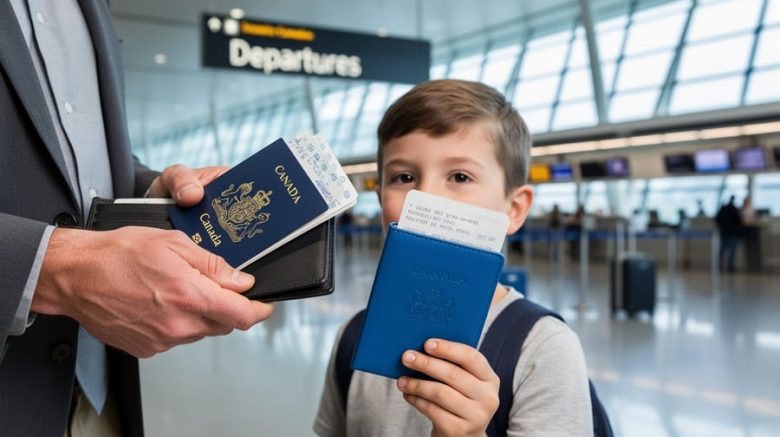
As of July 28, 2026, adult Canadians can now renew their passports entirely online, submitting applications, photos, and payment digitally without mailing documents or visiting a Service Canada Centre. While this change streamlines the process for many parents managing travel plans, it comes with an important caveat for separated and divorced families: children’s passports still cannot be renewed online and require full new applications each time they expire until the child turns 16.
This policy update creates a two-tier system that directly affects how co-parents coordinate travel documentation. If you hold an adult passport, you can skip the lineups and mail delays. But if you’re managing your child’s passport for custody-related travel or family visits, you’ll still need to navigate the traditional application process, which typically requires consent from both parents. Given that passport and travel document fees also increased on March 31, 2026, separated parents should factor both the procedural requirements and updated costs into their custody planning.
For fathers seeking greater involvement in parenting decisions and families working through custody agreements, understanding these distinctions matters. The online option may simplify your own renewals, but your child’s documentation timeline hasn’t changed. That means coordinating with your co-parent well ahead of planned trips, ensuring you both have the necessary consent forms ready, and building extra time into your travel preparations to account for the full application process children still require.
What Changed: The New Online Passport Renewal System
On July 28, 2026, the Canadian government announced a major shift in how adults can maintain their travel documents: eligible Canadians can now renew online July 28, 2026 without mailing in paperwork or visiting a Service Canada Centre. The entire process, application, photo submission, and payment, happens digitally. This eliminates waiting for mail, arranging time off work for an in-person visit, and the hassle of certified photos from a studio. For busy parents managing work, household responsibilities, and parenting time, this convenience is real.
The digital-first approach streamlines what used to be a multi-step ordeal into a single online session. You upload your own photo, pay electronically, and track your application status from home. For separated parents juggling custody schedules and logistics, this is one less errand to coordinate. But here’s the critical limitation: this convenience applies only to your own adult passport. The new system does not extend to children. If you have kids under 16, their passports must still be replaced with brand-new applications every time they expire, requiring the full set of forms, parental signatures, and supporting documents. The policy change helps you, but it doesn’t simplify the process for your children’s travel documents, the very ones most families with shared custody struggle to keep current.

Key Developments Affecting Families With Children

1. Child Passports Still Cannot Be Renewed, Full Applications Required Every Time
Child passports operate under fundamentally different rules than the new adult online renewal system. You can’t renew a child passport each time it expires before your child turns 16, you must complete an entirely new application from scratch. This means gathering fresh documentation, obtaining new photographs, filling out forms, and submitting everything by mail or in person at a Service Canada Centre. For separated or divorced parents, this creates a recurring coordination challenge that can strain even amicable co-parenting relationships.
In most custody arrangements, both parents must consent to the passport application and provide signatures on the required forms. If one parent is unavailable, unresponsive, or deliberately withholding consent, the application stalls. When you’re facing an upcoming family vacation, a scheduled visit with relatives abroad, or a trip you’ve already paid for, these delays can quickly escalate into conflict and financial loss.
The process demands proactive communication and planning. Don’t wait until a child’s passport is about to expire or a trip is imminent. Start the conversation with your co-parent months in advance, confirm both of you understand the documentation requirements, and build in buffer time for mail delays or administrative issues. Treating passport applications as routine logistical coordination, rather than battleground territory, protects your child’s opportunities to travel and reduces unnecessary stress for everyone involved.
2. The 16-Year Transition: Moving From Child to Adult Passports
When your teenager’s child passport expires after their 16th birthday, the rules change completely. They cannot renew that child document. Instead, they must apply for an adult passport at 16 through a full application process, exactly as if they were getting their first passport.
This transition catches many separated parents off guard. The 16-year milestone means both parents need to coordinate on a new adult application, which requires different documentation, updated photos, and both signatures in most custody arrangements. If your teenager is 15 and holding a valid child passport, plan ahead now: that document cannot be extended or upgraded, so you will face a fresh application the moment it expires.
For co-parenting families, this creates a specific planning challenge. If your teen has travel plans shortly after turning 16, start the adult passport process well before the child passport expires. Processing times are the same whether your child is 10 or 16, but the stakes are higher when a teenager has school trips, sports tournaments, or college visits on the calendar.
Both parents need to understand this threshold. It is not optional, and the new application cannot be completed by one parent alone without proper consent. Build this milestone into your custody conversations now, especially if your child’s 16th birthday falls within the next passport cycle.
3. Passport Fees Increased as of March 31, 2026
Just months before the online renewal system launched, passport service fees increased March 31, 2026 a change that hits families with children particularly hard. While adults now renew online once every decade, parents managing multiple children’s passports face repeated full applications, each carrying the higher price tag. A family with three kids under 16 will pay for new applications every five years for each child, making travel document costs a recurring line item that many separation agreements don’t anticipate.
The fee increase compounds the coordination burden. When both parents share expenses but one handles the logistics, disagreements over who pays what can escalate quickly. If you’re working to budget child support and household expenses, factor in passport renewals as a predictable but often overlooked cost, especially if your children travel between provinces or internationally for parenting time.
Payment options for mailed applications include credit card, embossed prepaid card, or certified cheque or money order in Canadian funds made payable to the Receiver General for Canada. Discussing these costs upfront and documenting who covers initial fees versus reimbursements can prevent common child support mistakes. Many parents find it simpler to split passport expenses evenly or trade off responsibility with each renewal cycle, but whatever arrangement you choose, put it in writing.
Why This Matters for Co-Parenting Families
The gap between adults’ new convenience and children’s unchanged requirements creates real strain for separated families. While you can now renew your own passport in minutes from your phone, getting travel documents for your kids still means coordinating signatures, scheduling notary appointments, and navigating the full application process, often with an ex-partner you’d rather not have to negotiate with at all.
Passport applications routinely become flashpoints in high-conflict custody situations. One parent may drag their feet on signing the consent form, either out of genuine concern about the trip or as leverage in other disputes. Others weaponize the process entirely, refusing cooperation to block travel or create stress. In cases involving parental alienation the parent undermining the other’s relationship with the child may deliberately obstruct international travel opportunities that would strengthen that bond.
The policy also demands advance planning that doesn’t always align with parenting schedules. If you’re proposing a spring break trip but it’s not “your time” when applications need submitting, you’ll need your co-parent’s active participation weeks ahead. Miss the window, and you’re stuck explaining to disappointed kids why the trip isn’t happening.
This is why passport responsibilities belong in your separation agreement alongside custody schedules and decision-making authority. Spell out timelines for consent, cost-sharing for applications and renewals, and what happens when one parent refuses. Both parents, fathers included, have equal responsibility for managing these documents and equal rights to plan meaningful travel with their children. The new policy won’t make that coordination easier, so clear expectations and proactive communication matter more than ever.

What to Watch and How to Prepare
The July 2026 online renewal launch is just the beginning. Service Canada has signaled a shift toward digital processes, and separated parents should expect further updates that may eventually simplify child passport applications. Stay informed by checking Service Canada’s website quarterly for announcements, and consider signing up for email alerts if available. Keeping track of your children’s passport expiry dates at least six months in advance gives you breathing room to coordinate with your co-parent without last-minute stress.
Now is the time to establish clear communication protocols around travel planning. Discuss upcoming trips during regular check-ins, not when a passport is about to expire. If your separation agreement doesn’t address passport applications, consider adding a clause that outlines timelines, who covers costs, and how decisions about international travel will be made. Building this structure reduces conflict and models critical thinking about problem-solving for your children.
Take these practical steps to prepare:
- Check all family passport expiry dates now and mark them in a shared calendar.
- Discuss travel plans with your co-parent at least three months in advance.
- Review your separation agreement for any existing travel or expense-sharing clauses.
- Bookmark Service Canada’s online renewal page to streamline your own passport renewals.
- Budget for the increased fees that took effect March 31, 2026, especially if you have multiple children.
If you’re eligible for online renewal, take advantage of it for your own passport. The simplified process frees up mental energy and time to focus on the more involved child applications. Keeping your own documents current also ensures you’re ready to travel with your children when the opportunity arises, strengthening your active role in their lives.
Common Questions About the New Passport Rules
Can I renew my child’s passport online? No. The new online renewal system applies only to eligible adult passports. Child passports cannot be renewed at all, they must be replaced with entirely new applications each time they expire, requiring fresh documentation, photos, and both parents’ consent in most cases.
Do I need my ex-partner’s signature for my child’s passport application? Usually, yes. Unless you have sole custody with explicit decision-making authority over travel, both parents must sign the child’s passport application. This requirement hasn’t changed with the 2026 policy update, so you’ll still need to coordinate signatures and consent forms with your co-parent before submitting the application.
Can I renew my child’s passport online?
No. Child passports cannot be renewed online or renewed at all. They must be replaced with new applications each time they expire until the child turns 16.
Do I need my ex’s signature for our child’s passport?
In most shared custody situations, yes. Both parents must typically consent and sign the child’s passport application unless you hold sole custody with decision-making authority over travel.
What happens when my child turns 16?
Once your child turns 16 and their child passport expires, they must apply for an adult passport. You cannot renew the expired child passport, it’s a fresh application for the adult document.
How much more expensive are passports now?
Passport service fees increased as of March 31, 2026. Check Service Canada’s current fee schedule for exact amounts, as costs vary by passport type and processing options.
What if my child is about to turn 16? If your teenager’s child passport expires at or after age 16, they’ll need to apply for an adult passport instead. You can’t renew the child document, treat it as a new adult application with updated requirements and fees.
Can I use the online renewal system if I share custody? Yes, but only for your own adult passport. The online system simplifies renewals for parents managing their personal travel documents, freeing up time to handle the more complex child applications that still require full paper submissions and co-parent coordination.
The 2026 online renewal policy makes life easier for parents managing their own passports, but it doesn’t solve the coordination challenges families with children still face. Kids’ passports require full applications, both parents’ involvement, and careful advance planning, especially when separation adds complexity to the process. Understanding these rules isn’t just about paperwork; it’s about creating stability and opportunities for your children to travel, explore, and maintain important relationships. Both parents share equal responsibility here, and proactive communication makes all the difference. While we continue to advocate for simpler, family-centered processes, being informed and prepared today protects your family’s plans tomorrow.