

Vaping is now more common than smoking among Canadian teens, and the gap is wide. In the Canadian Tobacco and Drugs Survey, 20% of youth aged 15 to 19 had tried vaping, compared with 11% who smoke tobacco. If you’re a parent trying to understand what your teen is more likely to encounter, vaping is the answer, and it’s worth knowing the numbers before you start the conversation.
The picture gets sharper with age. The Canadian Tobacco and Nicotine Survey found that in 2022, 14% of 15 to 19 year olds had vaped in the past 30 days, rising to 20% among 20 to 24 year olds. Among Canadians 25 and older, the figure was just 4%. Vaping is a young person’s habit, and Gen Z sits right at its centre.
The reasons matter as much as the rates. The same survey found that stress relief was the top reason for vaping, cited by 31% of 15 to 19 year olds and 33% of 20 to 24 year olds. That’s a very different story from the one many parents expect, and it points toward support rather than punishment.
Whether you’re co-parenting across two homes or raising your kids on your own, consistent, calm conversations from every caring adult make the biggest difference. Fathers have a real role here. Below, we compare vaping and smoking side by side so you can talk with your teen using facts, not fear.
Teen Vaping vs. Smoking at a Glance
Among Canadian youth aged 15 to 19, vaping is now the more common experience than smoking. Here are the core figures side by side, drawn from national surveys.
| Group | Measure | Figure |
|---|---|---|
| Youth aged 15 to 19 | Have tried vaping | 20% |
| Youth aged 15 to 19 | Smoke tobacco | 11% |
| Youth aged 15 to 19 | Vaped in the past 30 days (2022) | 14% |
| Ages 20 to 24 | Vaped in the past 30 days (2022) | 20% |
| Ages 25 and older | Vaped in the past 30 days (2022) | 4% |
| All Canadians 15 and older | Vaped in the past 30 days (2022) | 6% |
Source: the first two rows come from the Canadian Tobacco and Drugs Survey, and the past-30-day rows come from the Canadian Tobacco and Nicotine Survey.
Notice that “have tried” and “past 30 days” are different questions, so the 20% and 14% figures for teens measure different things. Researchers have long examined youth trial vaping vs smoking as a way to understand how young people first experiment with nicotine products.
Key takeaway: These numbers come from national surveys, so they describe broad patterns rather than any one teen or family. This article does not cover the survey years for every figure or how much the numbers have changed over time, so please treat them as a snapshot, not a trend line.
What Vaping and Smoking Are: Plain-Language Definitions for Parents
Before comparing the numbers, it helps to be clear about what is being counted. Vaping and smoking get lumped together, but they work differently. Vaping uses a battery-powered device that heats a liquid into an aerosol, which the person then inhales. Smoking tobacco means burning dried tobacco leaf and breathing in the smoke. Both can deliver nicotine, though vape liquids can also contain other substances.
Here are the key terms used in the Canadian surveys behind these statistics:
- Vaping
- Inhaling the aerosol created when a device heats a liquid, which may contain nicotine or other substances.
- Smoking (tobacco)
- Burning tobacco, usually in a cigarette, and inhaling the smoke.
- Nicotine
- A substance found in tobacco, and in many vape liquids, that can lead to dependence.
- Past 30-day use
- Whether someone vaped or smoked at least once in the month before being surveyed, a snapshot of current use.
- Have tried
- Whether someone has ever used a product, even once, which usually produces a higher number than current use.
That last distinction matters. When you see that 20% of youth aged 15 to 19 have tried vaping, that is a very different measure from the 14% in the same age group who vaped in the past 30 days. Neither number means every one of those teens vapes regularly. In the surveys, “youth” generally means ages 15 to 19, while “young adults” covers the early twenties.
Keeping these definitions in mind will make the figures in the next sections easier to read, and easier to discuss with your teen without jumping to conclusions.
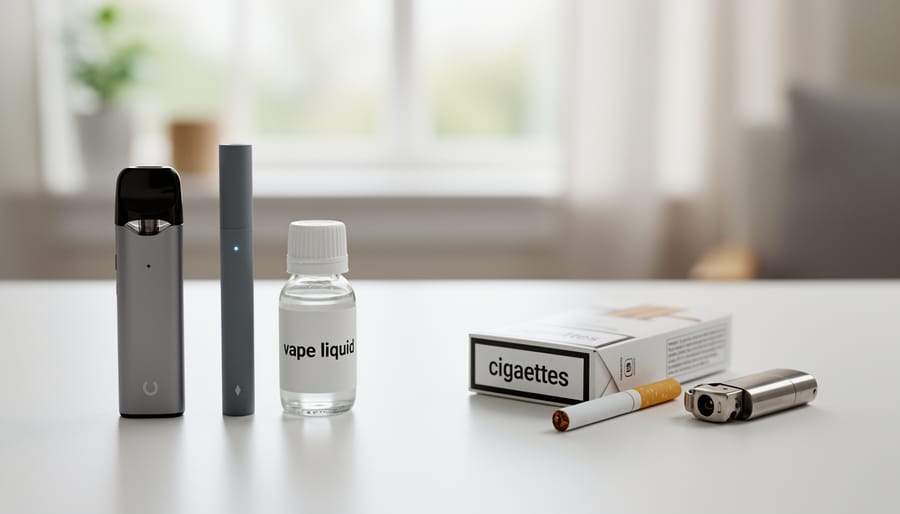
Gen Z Vaping Statistics in Canada: What the Surveys Show

How Vaping Use Differs by Age Group
When parents look at teen vaping vs smoking age matters a great deal. In the 2022 survey, which Health Canada summarizes under 2022 vaping past 30 days 14% of youth aged 15 to 19 had vaped in the past 30 days. That figure rises to 20% among 20 to 24-year-olds, then drops to 4% for Canadians 25 and older.
The pattern is a rise, a peak, and a sharp fall. Use is highest in the early twenties, the older edge of Gen Z, rather than in the teen years.
For parents, this suggests the conversation doesn’t end when a child turns 18. A young adult living on their own may face more pressure, not less. The data can’t tell us why the numbers fall after 25, so it’s best not to guess. What it does support is staying connected well beyond the high school years.
Why Young People Say They Vape
When young people explain why they vape, the answer is often not about fitting in or rebelling. According to the Canadian Tobacco and Nicotine Survey, reducing stress was the main reason given by 31% of 15- to 19-year-olds and 33% of 20- to 24-year-olds who vape.
That tells us something worth sitting with. Many of these young people aren’t chasing a thrill. They’re trying to cope with pressure, and vaping has become one of the ways they do it.
For parents, this opens a door. Instead of starting with blame or a lecture, try asking what’s weighing on your teen. School demands, friendships, work, and uncertainty about the future are all real sources of strain. When both parents stay curious and calm, even across two households, a teen is more likely to feel heard and more likely to talk about healthier ways of coping.
Teen Vaping vs. Smoking, Dimension by Dimension

When parents ask whether vaping or smoking is the bigger concern for teens, the survey data points to a clear difference in how common each is. It also shows that the two are used for different reasons. Here is how they compare across the dimensions the research can actually support.
| Dimension | Vaping | Smoking tobacco | What this means for parents |
|---|---|---|---|
| Youth aged 15 to 19 | 20% have tried it | 11% smoke tobacco | Vaping is the more common experience, so it’s worth raising early. |
| Age pattern (past 30 days) | 14% of 15 to 19, 20% of 20 to 24, 4% of 25 and older | Not broken out by age in the sources used here | Use peaks in the early twenties, so the conversation doesn’t end at 18. |
| Main reason cited by younger people | Stress reduction: 31% of 15 to 19, 33% of 20 to 24 | Not covered in these figures | Stress and coping are a good place to start talking. |
| Role in quitting smoking (25 and older) | 44% vape to reduce, quit or avoid returning to smoking | Not applicable | Adult reasons often differ from teen reasons. |
The first row is the headline. Among 15 to 19 year olds, twice as many have tried vaping as smoke tobacco, so vaping has become the more familiar behaviour for this generation. The age pattern matters too. Past-30-day vaping climbs from 14% of teens to 20% of those aged 20 to 24, then falls to 4% for those 25 and older.
The reasons people give are where the picture gets interesting. Younger people most often point to stress relief, which is an emotional need rather than a smoking habit they’re trying to manage. Adults 25 and older tell a different story: 44% said they vaped to reduce, quit or avoid returning to smoking. That’s a harm-reduction motive, usually tied to a previous smoking habit, and it’s a very different starting point from a teen reaching for a device to cope with a hard week.
One caution. These figures answer different questions for different groups, some about trying, some about the past 30 days, some about motivation. They describe how common and why, not how risky. Please don’t read the table as a ranking of which option is “safer” for your child.
What the Numbers Mean for Parents, and Why Shared Parenting Matters
The numbers are a conversation starter, not a verdict. When 20% of Canadian youth aged 15 to 19 have tried vaping and 31% of them say stress is their main reason for vaping, the useful takeaway is that many teens are reaching for a way to cope. That invites curiosity from parents far more than punishment.
Fathers and mothers both have a part to play here. Teens do best when they have more than one trusted adult to turn to, so staying involved matters, whatever your household looks like. Single parents carry this work every day too, and the same approach applies: stay present and keep the door open. If you’re sharing parenting time across two homes, the biggest gift you can give your teen is a consistent message. Shared agreement on rules and expectations keeps your teen from playing one household against the other, and it shows them you’re on the same team. Different parenting styles can work side by side when the core expectations match. Some parental teaching strategies can help you turn those expectations into everyday habits.
A few practical ways to start:
- Ask open questions, such as “What do you see your friends doing?”, instead of interrogating.
- Listen for stress, since that’s the reason teens most often name.
- Keep your messages consistent across both households.
- Agree together on clear expectations and consequences.
- Reach out to a family doctor or health professional if you need extra support.
Cooperative parenting also protects your relationship with your teen. When one parent is pushed to the sidelines, teens lose a confidant, and ongoing conflict can feed parental alienation. That’s why we advocate for family law reform that makes shared, cooperative parenting easier, because children’s well-being is stronger when both parents can stay engaged.
Which Approach Fits Your Family? Who Should Choose Which Path
The right approach depends on where your family is right now. These are starting points, not rules.
If your teen is younger and hasn’t started: Focus on early, low-pressure conversation. With 20% of Canadian 15-to-19-year-olds having tried vaping, it helps to talk before the topic comes up at school or among friends. Ask what they’ve seen and listen more than you lecture.
If your teen already vapes or smokes: Curiosity will serve you better than punishment. Since stress relief is the most common reason young people give, ask what’s weighing on them. Then look at cessation resources together, and consider booking a visit with your family doctor.
If you co-parent across two households: Agree on one message and one set of expectations before you talk to your teen. Mixed signals between homes give teens room to play one parent against the other. Both parents showing up, calmly and consistently, gives your teen more than one trusted adult to lean on.
If you’re an adult (25+) who vaps to quit smoking: You’re in a more complicated spot, and that’s okay. Among Canadians 25 and older, 44% said they used vaping to reduce, quit, or avoid returning to smoking. Your teen may still notice the device in your hand. Being honest about why you use it, and about your plan to stop, can turn a mixed message into a real conversation.
Whatever your situation, a family doctor or local health professional can offer guidance tailored to your family.
Frequently Asked Questions About Gen Z Vaping and Smoking
Are more teens vaping or smoking in Canada?
Vaping is the more common experience. In the Canadian Tobacco and Drugs Survey, 20% of youth aged 15 to 19 have tried vaping, compared with 11% who smoke tobacco.
What percentage of Gen Z vapes?
It depends on the age group. In 2022, the Canadian Tobacco and Nicotine Survey found that 14% of those aged 15 to 19 and 20% of those aged 20 to 24 had vaped in the past 30 days.
Why do teens vape?
Stress relief is the leading stated reason. Among 15-to-19-year-olds, 31% named reducing stress as their main reason, and 33% of 20-to-24-year-olds said the same.
Is vaping a way to quit smoking?
Some adults use it that way. Among Canadians 25 and older, 44% said they vaped to reduce, quit, or avoid returning to smoking, though that is a self-reported motivation and not a measure of how well it works.
How can separated parents handle teen vaping together? Start by agreeing on one calm, consistent message so your teen hears the same expectations at both homes. Talk with your teen about stress and what’s behind the habit, and keep both parents involved so there’s more than one trusted adult to turn to. If you’re unsure where to begin, a family doctor can point you toward local support.
The numbers tell a clear story. Among Canadian youth aged 15 to 19, 20% have tried vaping, compared with 11% who smoke tobacco, and stress is a leading reason young people give for vaping. That points less toward blame and more toward connection.
For parents, the most protective thing you can do is stay close, ask honest questions, and listen without panic. Fathers and co-parents have a real role here. When two households share the same calm message and the same expectations, teens get consistency and more than one trusted adult to turn to.
If you’re parenting across two homes, our resources on parenting after separation and children’s well-being can help you build that shared approach. And if you believe cooperative parenting should be easier for every family, we invite you to support family law reform that puts children’s well-being first.