
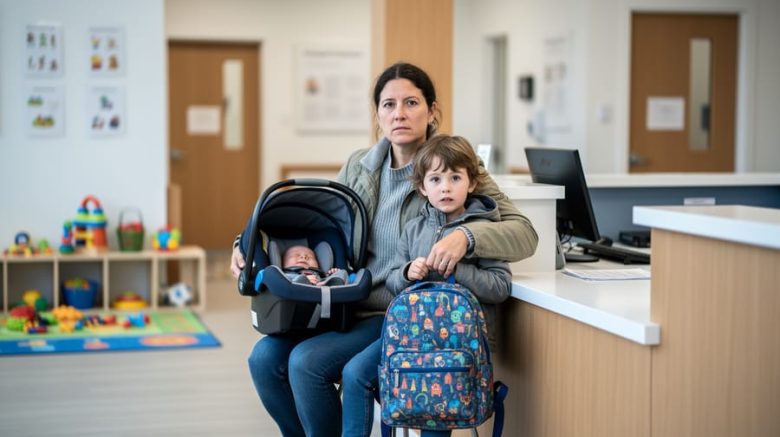
In October 2026, BC NDP Leader David Eby publicly defended his family’s enrollment in British Columbia’s $10-a-day child-care program after political opponents questioned whether a Premier’s family should access subsidized care intended for families struggling with affordability. The controversy centers on program eligibility, which isn’t income-tested, raising questions about fairness and access that matter to every BC parent trying to secure affordable childcare.
Eby explained that one of his children was already attending a childcare center when it converted to a $10-a-day site, and his family voluntarily donated back to the facility after benefiting from the reduced rate. The political debate, however, extends beyond one family’s choices. BC’s $10-a-day program has created only a limited number of spaces despite campaign promises to deliver universal access to high-quality, affordable childcare. Thousands of families across the province remain on waitlists, regardless of income, custody arrangements, or household structure.
For parents navigating BC’s childcare system, whether you’re co-parenting after separation, raising children together, or managing solo, this controversy highlights the real barriers to accessing care: limited spaces, unclear eligibility, and the gap between political commitments and on-the-ground availability. Understanding how the program actually works, who qualifies, and what the political pushback means for future expansion can help you plan effectively and advocate for your family’s needs. This article breaks down the controversy, explains the program’s current state, and provides practical guidance for all BC families seeking affordable, accessible childcare in 2026.
What Actually Happened: The David Eby Daycare Story
In mid-October 2026, BC NDP Leader David Eby found himself at the center of a childcare controversy that sparked debate across the province. The issue came to light when questions arose about his family’s enrollment in British Columbia’s $10-a-day child care program, a signature initiative his government had championed but delivered on a limited scale.
Eby responded to the criticism by clarifying the Eby child care timeline. He explained that one of his children was already attending a particular child care center when it later became designated as a $10-a-day site. In other words, his family had not jumped the queue for a coveted subsidized space. Rather, the center they were using transitioned into the program while his child was enrolled there.
Acknowledging the optics of using a program with far fewer spaces than families needing them, Eby stated that his family chose to make a donation to the facility when it became a $10-a-day site. This gesture appeared aimed at addressing concerns about a high-earning political leader benefiting from a subsidy designed to help families struggling with childcare costs.
The controversy unfolded against a backdrop of broader frustration. While the BC NDP had campaigned on providing high-quality child care for $10 a day, the government created only a limited number of spaces at that rate, leaving many families still paying market rates. For parents across BC, the debate raised uncomfortable questions about who gets access to affordable childcare and whether the program’s rollout matched its ambitious promises.
Understanding BC’s $10-a-Day Child Care Program

Who Qualifies and How to Access Spaces
Any BC family can apply for a $10-a-day space, but availability is extremely limited. Eligibility isn’t restricted by income or custody arrangements, the challenge is simply finding an available spot. Parents apply directly through individual designated centres, not through a centralized provincial system. Each centre maintains its own licensed capacity and waitlists which means you’ll need to contact multiple facilities if your first choice has no openings.
The provincial website lists designated sites by region, but those lists don’t show real-time availability. You’ll need to phone or email each centre to learn about current spaces and waiting periods. Some families report waitlists stretching months or even years, particularly in urban areas. This creates a practical problem similar to navigating any child care waitlist you’re competing for limited spots with other families who also need affordable care.
Getting on multiple waitlists early increases your chances, but there’s no guarantee. The program doesn’t prioritize applications based on financial need or family structure, so separated parents managing dual households compete on the same terms as intact families.
The Promise Versus the Reality
The BC NDP’s signature childcare promise has delivered meaningful progress while falling short of its original scope. The province has created thousands of $10-a-day spaces, providing genuine relief to families fortunate enough to access them. However, these designated sites represent a fraction of BC’s childcare landscape, leaving most parents still paying market rates that can exceed $1,500 monthly per child.
The gap between campaign messaging and current availability creates frustration across the political spectrum. When leaders promised “$10-a-day childcare,” many families understood this as universal access rather than a lottery system with limited spaces. The program exists, but securing a spot often requires waitlists, geographic luck, and timing that doesn’t align with when families actually need care.
This partial rollout affects all family types equally. Whether you’re managing dual-household expenses after separation, balancing two careers in an intact family, or navigating single parenthood, the challenge remains the same: finding affordable, quality care when you need it. The achievement is real, but so is the reality that most BC families still face the full brunt of Canada’s childcare affordability crisis.
Why This Matters to Every BC Family
The Affordability Crisis Affecting All Parents
Childcare costs in BC strain every family budget, regardless of structure. Before the $10-a-day program, average monthly fees ranged from $1,000 to $1,800 per child in many communities, equivalent to a second mortgage for most households. Even with limited $10-a-day spaces now available, the majority of families still face market rates that consume 20-30% of household income.
Dual-income families often find both parents working primarily to cover childcare expenses, questioning whether the financial math makes sense. Single parents face impossible choices between career advancement and affordable care. For separated parents managing two households, childcare represents a shared expense that affects both parenting time and overall financial stability, but the affordability crisis hits intact families just as hard.
The gap between the program’s promise and its current limited availability means most BC families remain locked out of subsidized care. Waitlists stretch months or years, forcing parents to piece together informal arrangements, rely on family help, or pay premium rates that derail other financial goals like saving for education or homeownership.
This universal pressure explains why the David Eby controversy resonated beyond partisan politics: families watching leaders access scarce program spaces while they struggle reflects the daily reality that affordable childcare remains aspirational rather than accessible for most British Columbians.

Special Considerations for Separated and Divorced Parents
For separated parents, childcare costs represent a unique financial and logistical challenge that extends beyond simple budgeting. When both parents maintain separate households and share parenting time, access to affordable care during each parent’s time becomes essential, not just for the parent’s work schedule, but for maintaining meaningful involvement in the child’s daily routine.
The limited availability of $10-a-day spaces highlighted by the recent controversy can create difficult situations when only one parent’s preferred facility has designated spots. This disparity affects not just convenience, but the practical ability of both parents to work and spend quality time with their children. When parents include child support calculations and parenting arrangements, unequal access to affordable childcare can strain already complex negotiations.
For many separated families, childcare expenses factor into both special expenses provisions and practical co-parenting discussions. The actual cost parents pay, whether $10 daily at designated sites or market rates elsewhere, directly impacts what’s considered reasonable when splitting these expenses. When one parent has access to subsidized care and the other doesn’t, it raises questions about fairness and financial responsibility that custody agreements must address.
The broader point matters here: policies affecting childcare access don’t exist in a vacuum. They directly shape whether both parents can maintain stable work and housing situations that support their parenting time.
The Political Debate and What It Reveals

The October 2026 controversy surrounding Eby’s family using the $10-a-day program has sparked legitimate debate about fairness and political optics. When political leaders benefit from programs they create, questions naturally arise, not necessarily about legal propriety, but about perception and equity.
Critics argue that when demand far exceeds available spaces, leaders should perhaps step aside to let families without other options access scarce spots. The symbolism matters: a premier with financial resources using a program designed for affordability sends a message, even if technically appropriate. Opposition voices have highlighted this as tone-deaf during an affordability crisis affecting thousands of families.
Eby’s defense centers on timing, his child was already enrolled before the centre became a designated site, and his family’s voluntary donation when the transition occurred. This raises a practical question many families face: should existing families vacate spots when a centre joins the program? The answer isn’t straightforward, and Eby’s situation illustrates the complexity of implementation.
Beyond the political theatre, this controversy reveals deeper policy challenges. The gap between campaign promises of universal $10-a-day care and the current reality of limited spaces creates inherent competition and resentment. When a program can’t serve everyone who needs it, any high-profile family’s access becomes scrutinized.
This debate also exposes how childcare costs intersect with other family expenses. Parents already navigating child support mistakes and managing before-after care cost pressures understand the stakes intimately. Whether you view Eby’s choice as reasonable or problematic, the underlying issue remains: BC families need more affordable childcare spaces, not fewer.
The controversy has at least focused attention on the program’s shortcomings. When politicians face criticism for using programs they championed, it underscores the urgency of expanding access so these fairness debates become moot.
Practical Steps for Your Family Right Now
If You’re Managing Co-Parenting Costs
Childcare costs can complicate co-parenting budgets significantly. When one or both parents secure a $10-a-day space, document everything: enrollment confirmations, payment receipts, and any waitlist correspondence. This documentation matters for child support calculations and ensures both parents understand actual expenses.
Start conversations with your co-parent about childcare arrangements early. Discuss whether each household needs separate care during their parenting time or if shared arrangements work better. Be transparent about costs, whether you’re paying $10 daily at a designated site or $50+ elsewhere, since these differences affect how expenses are divided.
If only one parent accesses affordable spaces while the other pays market rates, consider how this impacts your support agreement. Many separated parents find it helpful to revisit their arrangements when childcare costs change substantially. Both households need sustainable options that don’t force either parent to reduce their parenting time due to affordability.
Keep copies of all childcare applications and waitlist positions. If disputes arise about who should claim childcare expenses or how costs should be shared, clear records prevent misunderstandings and support fair resolution.
Making Your Voice Heard on Childcare Policy
Whether this controversy changes your view of BC’s childcare policy or reinforces existing concerns, parents have concrete ways to influence the future of affordable childcare in the province.
Start by contacting your MLA directly. Share your specific experience with childcare costs and access challenges. Personal stories from constituents carry more weight than general complaints, so explain how the current system affects your family budget and your ability to maintain consistent care arrangements.
Join advocacy organizations working on childcare policy reform. Groups like the Coalition of Child Care Advocates of BC and $10aDay Child Care Campaign welcome parent voices and provide structured ways to participate in policy discussions. These organizations often coordinate letter-writing campaigns, public consultations, and meetings with government officials.
Participate in government consultations when they’re announced. The Ministry of Education and Child Care periodically seeks public input on program expansion and policy changes. Watch for these opportunities and submit your feedback, whether it focuses on access issues, affordability gaps, or the need for more designated spaces in your community.
Connect childcare advocacy with broader family policy reform. Affordable childcare affects parenting equality, especially when separated parents share custody and both need access to sustainable care options during their parenting time. Supporting policies that recognize the financial realities of modern parenting benefits all family structures.
The David Eby daycare controversy will fade from headlines, but the challenges BC families face in accessing affordable childcare won’t. Whether you’re managing co-parenting arrangements, stretching a single income, or simply trying to balance work and family life, the gap between childcare promises and reality affects your daily decisions and your budget.
This controversy highlights a fundamental truth: all parents, regardless of family structure or political affiliation, need childcare systems that actually work. When spaces are limited and costs remain high outside designated sites, families make difficult compromises. Some parents reduce work hours. Others piece together informal arrangements. Many simply pay far more than $10 a day because they can’t access the program.
Your family’s needs matter more than political debates. Focus on practical steps: researching available options, documenting your childcare expenses, and planning sustainably for your situation. But also recognize that individual solutions aren’t enough. BC’s childcare landscape needs continued improvement, and parents’ voices drive that change.
Creating environments where children thrive requires both immediate action and long-term advocacy. Whatever brought you to this article, we hope you found clarity about the program and practical guidance for your family’s path forward.